


This Turkish lentil soup recipe is the version I regularly make at home with red lentils, potato, carrot, onion, garlic, turmeric, cumin, and a little saffron. I prefer a smooth and creamy soup, but I do not use flour to thicken it. Instead, one medium potato gives me the texture I want.
Mercimek çorbası is one of the soups I eat most often, especially during autumn and winter. I normally make enough for about four servings rather than cooking only one bowl at a time. In colder months, I may eat lentil soup several times in a week.
My method is also slightly different from my mother’s. She considers flour an important part of her lentil soup and does not use potato. I prefer potato, carrot, and a smooth blended texture. Both are family versions of the same familiar Turkish soup.
My Turkish Lentil Soup Uses Potato Instead of Flour
Flour is commonly used in some home-style lentil soup recipes to help create a thicker consistency. My mother uses it this way. I do not.
For four servings, I use one medium potato. Once it cooks completely and is blended with the lentils, it helps create a creamy, homogeneous texture without needing flour.
I also use one medium carrot. Besides adding body to the soup, the carrot gives my version a warmer orange tone. Turmeric deepens that color further.
This is a personal cooking preference rather than a rule for Turkish lentil soup. If you grew up with a flour-thickened version, that method is perfectly familiar in Turkish home cooking too.
The Ingredients I Use
For four servings, my starting point is one cup of red lentils. Alongside the lentils, I add one medium onion, one medium potato, one medium carrot, and two cloves of garlic.
Garlic is mainly there because I like the aroma it gives a winter soup. Black pepper and cumin are also part of my version. Cumin works particularly well with the earthy flavor of lentils.
For color and aroma, I use both turmeric and saffron. Turmeric gives the soup a stronger golden-orange color. A small amount of saffron thread is my personal addition; I would not describe saffron as an essential ingredient in every Turkish lentil soup.
My Lentil-to-Liquid Ratio
For one cup of red lentils, I start with approximately five cups of liquid.
My usual combination is two cups of homemade chicken stock and three cups of water. Chicken stock from previously cooked chicken is often frozen and saved specifically for soups.
Bouillon cubes are not part of my home cooking because their flavor feels too dominant in this recipe. Stronger meat stocks can also overpower the lentils and vegetables. For that reason, chicken stock gives me the milder background flavor I prefer.
For a completely plant-based version, water works well instead. The vegan variation is explained further below.
Why I Do Not Sauté the Vegetables First
A familiar method for Turkish lentil soup is to sauté the onion first and then continue with the other ingredients. My own method is simpler.
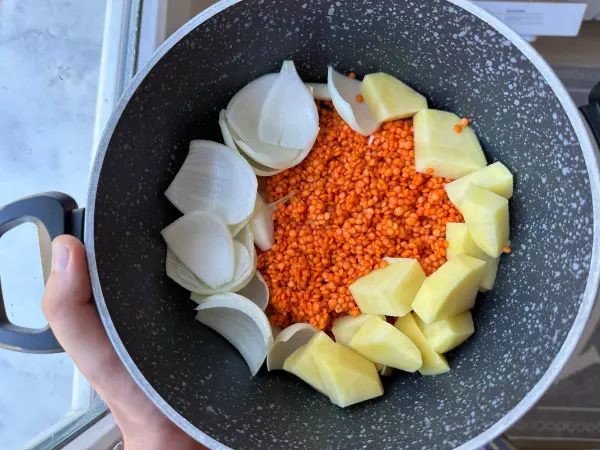
I put the rinsed lentils, onion, potato, carrot, garlic, chicken stock, and water directly into the pot and cook them together.
This is the method I prefer at home. It also means I do not need an additional frying stage before cooking the soup.
The detailed quantities and cooking sequence are in the recipe card, while this guide explains the visual and texture cues I actually use when making it.
How I Know When the Lentil Soup Is Cooked
I do not rely only on a fixed cooking time because the lentils, vegetables, pot, and heat level can all affect how quickly the soup cooks.
Instead, I watch the texture.
The lentils should be completely soft, and the potato and carrot should break apart easily. As the soup thickens over low heat, I look for slow, heavier bubbles rising through the surface rather than the thin bubbling of plain water.
That is usually my signal that the ingredients are soft enough to blend and the soup has developed enough body.
I Blend the Soup but Do Not Strain It
For the texture I grew up associating with Turkish lentil soup, I want the finished soup to be smooth and homogeneous.
I use an immersion blender directly in the pot and blend the lentils and vegetables together. I do not pass the finished soup through a sieve because I like keeping the blended vegetables in the soup.
Be careful when blending hot soup. I turn off the heat and make sure the blender head is fully submerged before switching it on. I keep the blade away from the surface because very hot soup can splash upward.
Once blended, I can immediately see whether the consistency needs adjusting.
How I Adjust the Consistency
One of the easiest things about lentil soup is that you can correct the texture while it is still on the stove.
If mine becomes too thick, I boil some water separately and add a little at a time while the soup is still cooking. If it is too thin, I leave the lid off and continue simmering it gently so some of the water can evaporate.
I make these adjustments before I consider the soup finished.
“Pişmiş aşa su katılmaz” in My Family
My grandmother, my late aunt, and my mother have always agreed on one point: once the soup is finished, do not keep changing its consistency by adding water later.
They say that repeatedly diluting a finished soup makes its flavor weak and can give it a less pleasant taste. Because of that, I try to get the consistency right while the pot is still cooking.
It always reminds me of the Turkish expression “pişmiş aşa su katılmaz.” Literally, it means something close to “water is not added to a dish that is already cooked.” The expression is normally used figuratively in Turkish, but in my kitchen it also happens to describe how the older women in my family approach soup.
The Optional Butter, Mint, and Red Pepper Sauce
The butter sauce is not necessary for the soup itself. I consider it an optional finishing touch.
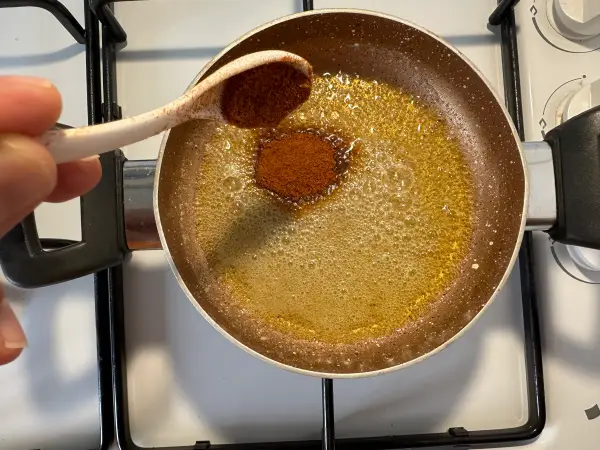
I melt about 1 to 1.5 tablespoons of butter over very low heat, then add red pepper flakes or paprika and dried mint.
The most important detail is speed. Once the spices hit the hot butter, about 10–15 seconds is enough for me. If I leave them over the heat for too long, they burn quickly and the sauce develops a bitter taste.
I therefore use my smallest burner on low heat and pour the aromatic butter over the bowls immediately.
Do I Add Lemon to Turkish Lentil Soup?
Yes, but only after serving.
I do not cook lemon juice inside the soup. At the table, I usually add roughly one or two spoonfuls to my own bowl, depending on how much acidity I want that day.
Other people at the table can leave it out completely or add extra salt or red pepper according to their taste. This is one reason I prefer seasoning the individual bowl rather than making the entire pot strongly sour or spicy.
How I Serve Mercimek Çorbası
I usually serve it hot with lemon on the side. A slice of fresh Turkish bread also goes naturally with a bowl of smooth lentil soup.
For me, this is especially a cold-weather meal. I eat it throughout the year, but autumn and winter are when I make it most often. When I do not feel well, it is also one of the familiar foods I personally tend to choose. I mean that as a comfort-food habit, not as a medical treatment.
Can You Make This Turkish Lentil Soup Vegan?
Yes. The base recipe is easy to adapt.
Replace the chicken stock with water or a vegetable stock you enjoy. If you want the optional finishing sauce, use olive oil instead of butter.
The lentils, potato, carrot, onion, and garlic already create plenty of body, so dairy is not required for the creamy texture.
My Mother’s Version vs My Version
One reason I like documenting family recipes is that there is rarely only one correct household method.
My mother prefers a more direct lentil flavor. She uses flour for consistency and does not use potato. My version uses potato and carrot, which produce the texture and color I prefer.
I also use turmeric and saffron, with saffron being very much my own preference rather than something I would present as a required ingredient in traditional mercimek çorbası.
These small differences are exactly what home cooking looks like to me: the dish remains recognizable, while every household gradually develops its own version.
A Few Final Tips From My Kitchen
- Rinse the red lentils before cooking.
- Cook the vegetables until they are completely soft before blending.
- Use potato if you want my flour-free, creamy version.
- Adjust the consistency while the soup is still cooking.
- Keep an immersion blender fully submerged when blending hot soup.
- Heat the optional mint and pepper butter only briefly so the spices do not burn.
- Add lemon after serving rather than during cooking.
- Treat saffron as my personal variation, not an essential ingredient.
More Turkish Soup and Food Guides
If you enjoy this recipe, you can also explore my guide to Turkish soups and the broader traditions I cover in Turkish food culture.
This version of mercimek çorbası reflects how I actually cook it at home: smooth, flour-free, gently seasoned, and adjusted by texture rather than by watching a timer.
Turkish Lentil Soup Recipe: My Creamy Red Lentil Version
Ingredients
Optional finishing sauce
For serving
Instructions
The Preparation of the Lentil Soup
-
Combine the lentils and vegetables
Add the rinsed red lentils, onion, potato, carrot, garlic, chicken stock, and water to a large pot. Bring to a gentle boil, then reduce the heat.
-
Add the seasonings
Add the salt, black pepper, cumin, turmeric, and saffron. Continue cooking over low heat until the lentils and vegetables are completely soft.
-
Check the consistency
The soup is ready for blending when the lentils and vegetables are very soft and the soup produces slow, thick bubbles while simmering. If it is too thick, add a little boiling water. If it is too thin, simmer uncovered for a few more minutes.
-
Blend the soup
Remove the pot from direct heat and blend the soup with an immersion blender until smooth and homogeneous.
-
Cooking the Lentil Soup
In this way, we cook the soup over medium-high heat until it starts to boil, and then reduce the heat to low once it boils. During this stage, the potato and onion pieces will absorb some of the water and soften. After about 10 minutes of boiling, the lentils will turn from orange to yellow, and they will float on the surface of the water. At this stage, if necessary, we can add some of the reserved boiling water. If not needed, we blend and puree the ingredients on the lowest heat setting for 3-4 minutes, from top to bottom. You will see that the lentil soup becomes homogeneous. This stage is the last opportunity to add water. If needed, we add water one last time at this stage and mix it well.
Keep the blender head fully submerged before switching it on, and avoid bringing the spinning blade close to the surface. Hot soup can splash and cause serious burns. -
Rest before serving
Cover the pot and let the soup rest for 5–10 minutes before serving.
-
Prepare the optional butter sauce
Melt the butter over very low heat. Add the red pepper flakes or paprika and dried mint, and cook for only about 10–15 seconds. Remove it from the heat before the spices begin to burn, then spoon the sauce over the soup.
-
Serve
Serve hot. Add lemon juice at the table according to taste rather than cooking it into the soup.
 I prefer potato instead of flour because it gives the soup a creamy texture without adding flour. My mother makes her lentil soup differently: she uses flour and does not add potato. I usually use 2 cups of homemade chicken stock and 3 cups of water. I avoid bouillon cubes because I do not like the flavor they give the soup. For a vegan version, use 5 cups of water and replace the optional butter sauce with olive oil. I adjust the final texture while the soup is still cooking. If it becomes too thick, I add boiling water. If it is too thin, I simmer it uncovered. In my family, there is a strong habit of not diluting finished soup after it has already been cooked and cooled. My grandmother, aunt, and mother all say that adding water later makes the flavor weaker. It reminds me of the Turkish saying “pişmiş aşa su katılmaz,” literally, “you do not add water to a cooked dish.”
Nutrition Facts
Servings 4
- Amount Per Serving
- Calories 225kcal
- % Daily Value *
- Total Fat 4.9g8%
- Saturated Fat 2.9g15%
- Trans Fat 0.2g
- Cholesterol 11mg4%
- Sodium 600mg25%
- Potassium 540mg16%
- Total Carbohydrate 36.1g13%
- Dietary Fiber 8g32%
- Sugars 3g
- Protein 11g22%
- Vitamin A 2900 IU
- Vitamin C 13.7 mg
- Calcium 34 mg
- Iron 3 mg
- Vitamin D 3 IU
- Vitamin E 0.6 IU
- Vitamin K 5.5 mcg
* Percent Daily Values are based on a 2,000 calorie diet. Your daily value may be higher or lower depending on your calorie needs.
