When people search for Turkish holiday traditions or “holidays in Turkey,” they are usually mixing two different ideas. The first is the religious bayrams, Ramazan Bayramı and Kurban Bayramı. These are often family-centered: morning prayer, cemetery visits, hand-kissing, sweets and a steady stream of short visits. The second is the set of national and public holidays, which are more civic and public, with flags, school ceremonies and official commemorations. In my experience, the two categories feel very different: religious bayrams were calmer and centered on family, while national holidays felt more formal, public and energetic.
This guide combines official facts with what I personally experienced growing up in Seferihisar, a coastal town in İzmir province. My aim is to explain Turkish holiday traditions through both documented facts and lived family routines. When I describe my own family, I say so. Customs vary by region, family and generation, so please read my memories as one family’s story, not a rule for everyone.
Turkish Holiday Traditions: Holidays in Turkey at a Glance
This quick reference is based on Turkey’s holiday law, Law No. 2429.
One practical point for travelers: the statutory bayram dates are fixed by law, but additional administrative leave for public employees can vary from year to year. Private-business schedules vary too. If your trip overlaps a religious bayram, check current transport, accommodation, bank and business hours rather than assuming every closure will follow the same pattern.
Turkish Holiday Traditions in My Family: A Bayram Morning
My childhood bayram mornings began early. When my uncle was alive and healthy, he took his son and me to bayram prayer. The day before, he would remind me of three things. I was to tell my mother the prayer time so she could wake me, take ablution, and be ready on time.
Bayram prayer is performed in the morning, and the exact time varies by date and location. What I remember most is not the timetable itself but the ritual around it: my uncle warning me the day before, my mother waking me, taking ablution, and being ready while the town was still quiet. For a child, that routine made the morning feel different from any ordinary day.
After prayer we drove to the cemetery to visit our deceased relatives. As we entered, my uncle said “Selamün aleyküm,” then answered, “Ve aleyküm selam.” When I asked why, he told me that one should greet the dead and answer the greeting on their behalf. The reply is what my uncle taught me, not a universal rule. Greeting those buried in a cemetery, however, is part of the grave-visiting etiquette described by Diyanet.
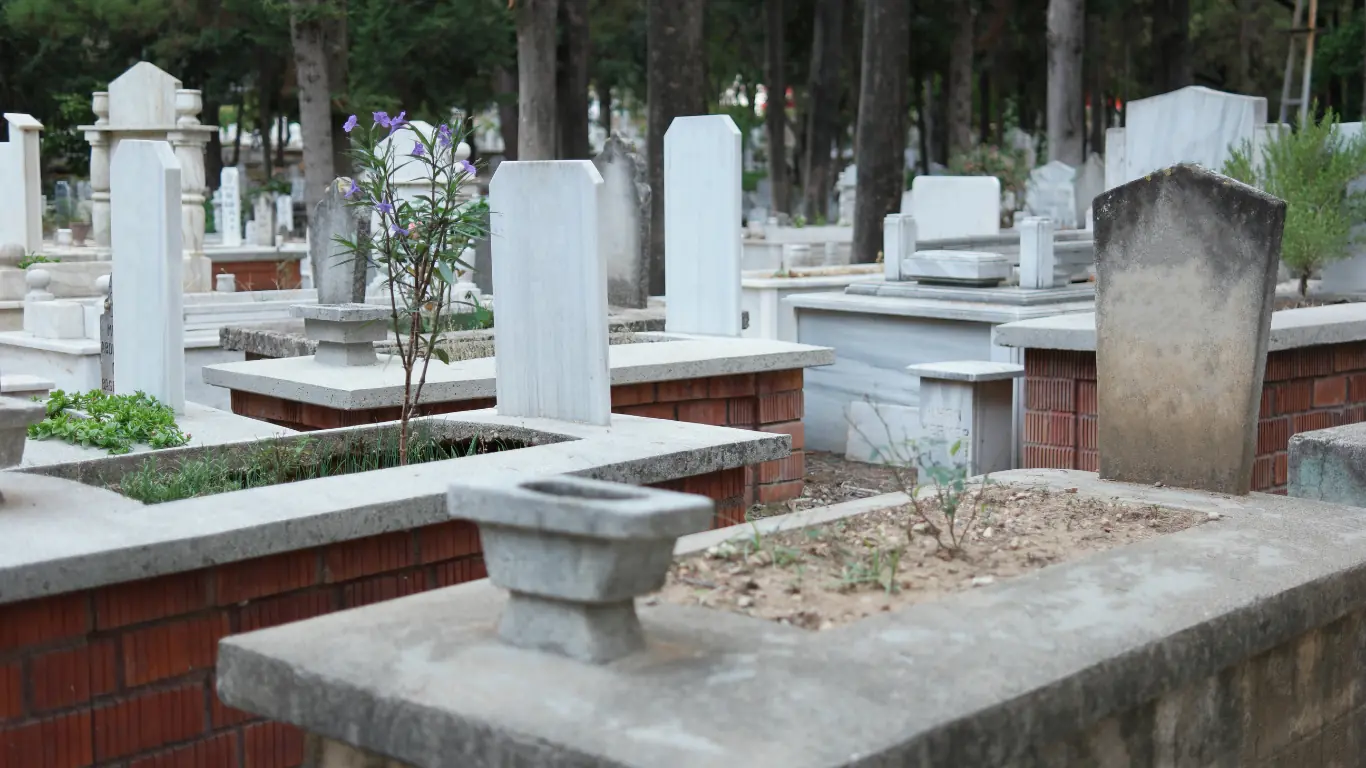
Back in town, we exchanged bayram greetings with shopkeepers who had opened early and briefly opened our family’s delicatessen. Customers came in for breakfast foods after prayer and cemetery visits. We sold for a few hours, closed, and sat down to family breakfast.
Arife: The Day Before Bayram
Arife, the eve of bayram, was special. Female relatives often visited the cemetery that day so they could stay home on bayram and not miss guests. My mother prepared and ironed our bayram clothes. The family also did a major house cleaning, and even the stairs of our three-story family apartment were washed thoroughly.
My mother, my aunt and my uncle’s wife made homemade baklava in one very large tray, later divided among our households. Around midday it went to the bakery opposite our home. By late afternoon it was baked, then syruped and ready for bayram morning. These preparations were among the Turkish holiday traditions I knew best growing up.
For Ramazan Bayramı and Kurban Bayramı, Law No. 2429 starts the statutory holiday at 13:00 on arife. For travelers, that makes the morning the safer time for banking or public-office errands.
Visiting Elders in Turkish Holiday Traditions
We lived on the second floor, my uncle on the first and my aunt on the third. I had already spent the morning with my uncle, but after changing into bayram clothes we still went downstairs to greet his household first. Then we went upstairs to my aunt, and finally to my maternal grandparents. In our family the father’s side happened to come first. That was our habit, not a national rule.

Kissing an elder’s hand and bringing it to the forehead was an unwritten rule in my family and social circle, and skipping it could seem disrespectful. Practice varies by family and generation; in my own observation, younger people tend to treat some of these rituals less strictly than the generation above me. Diyanet also lists visiting relatives and elders among bayram customs.
If you are a guest in a Turkish home during bayram, you are not expected to kiss anyone’s hand. A warm handshake and the greeting “İyi bayramlar” (“Happy bayram”) or “Bayramınız mübarek olsun” (“May your bayram be blessed”) will be appreciated.
Bayram Money
Bayram money (bayram harçlığı) was indispensable in our family. My uncle never separated my sibling and me from his own children. Whatever he gave them, he gave us too. My father and uncle also gave money to neighborhood children who came to greet them.
I saved mine for toy cap guns, footballs and ice cream, while neighborhood kids often bought wafers, chocolate and chips. My own bayram visits were limited to relatives and neighbors rather than going door-to-door across the whole neighborhood. From what my parents told me, that house-to-house custom had been even more common during their childhood.
What stayed with me was not the amount but the excitement of having money that felt completely mine. For us, bayram money was part of the child’s experience of the holiday: a small reward, a little independence, and an excuse to head to the neighborhood shop with friends.
How We Hosted Bayram Guests
In our home, guests first had five to ten minutes to settle in and take off their coats. Then came cologne (kolonya), bayram chocolate and conversation. After another short interval we served dessert, and Turkish coffee almost always followed. For me, this hosting sequence was one of the Turkish holiday traditions that made bayram feel immediately recognizable, although other households may serve different foods or follow a different order.
Visits generally lasted about half an hour, not hours. Honestly, as a child I often found the repeated visits to older relatives tiring and boring. Our Turkish dining etiquette guide covers related manners.
In my family, visits were usually short because several households had to be seen in the same day and hosts were receiving people continuously. Around half an hour felt normal to me. That pace made the day efficient for the adults, even if I found it repetitive as a child.
“Bayramda Küslük Olmaz”: No Grudges at Bayram
The saying means people should not remain estranged during bayram, and it was a strong norm in my social environment. Sometimes a mother and son, or two siblings, entered bayram not speaking. In that case the younger person could be criticized and was expected to make the first move. This was a lived social expectation, not a legal or religious absolute.
The bayram visit itself offers a face-saving way to reconcile. Showing up at the door with a greeting lets both sides move on without a long discussion of who was wrong.
Ramazan Bayramı (Şeker Bayramı)
Ramazan Bayramı, or Eid al-Fitr, marks the end of the fasting month. It begins with the morning bayram prayer, followed by family and grave visits, charity and festive meals. For the religious perspective, see Diyanet’s Ramazan Bayramı message.
Charity is closely tied to this bayram. Many families give fitre (sadaka-i fıtr), a set charitable donation meant to reach those in need before the holiday so they can celebrate too.
In my memory it is the sweeter bayram, full of chocolate, candies, homemade baklava and family visits. For savory offerings, my family usually bought dry pastries from a bakery. Because sweets are so prominent, people often call it Şeker Bayramı, the “Sugar Feast,” though Ramazan Bayramı is the formal name. For the month before it, see our Ramadan guide.
Kurban Bayramı: Meat, Sharing and My Aunt’s Kavurma
Kurban Bayramı, or Eid al-Adha, is the longer of Turkey’s two religious bayrams. Sacrifice and sharing meat are central to the holiday for families who observe the practice. Diyanet describes dividing the meat among the household, relatives or guests, and people in need as a recommended model rather than an absolute rule; depending on circumstances, a family may distribute more or even all of it. See Diyanet’s guidance on the sacrifice.
My own family was unusual in the scale of what we did. I clearly remember years when my father and uncle arranged roughly 10–12 sheep, including sacrifices made in memory of deceased relatives and people they had regarded almost as family. I would never present that number as normal for Turkish households. It was a distinctive practice in ours.
We also kept surprisingly little of the meat. My father was generous about distributing it, and most of what was prepared went to other people. What stayed with me most, though, was not the number of animals. It was the food that followed. My late aunt made kavurma every Kurban Bayramı, and in my memory nobody made it better. We ate it with bread, dipping the bread into the rich juices. I can still remember the taste.
That is the clearest difference between the two religious bayrams in my childhood memories: Ramazan Bayramı smelled of chocolate, syrup and baklava; Kurban Bayramı meant fresh meat, kavurma and often a family barbecue.
National Holidays in Turkey
Turkish holiday traditions are not limited to religious bayrams. National holidays felt completely different to me: religious bayrams were quieter and centered on family, elders, food and visiting, while national holidays were more public and formal, with flags, school rehearsals, stadiums, speeches, performances and crowds.
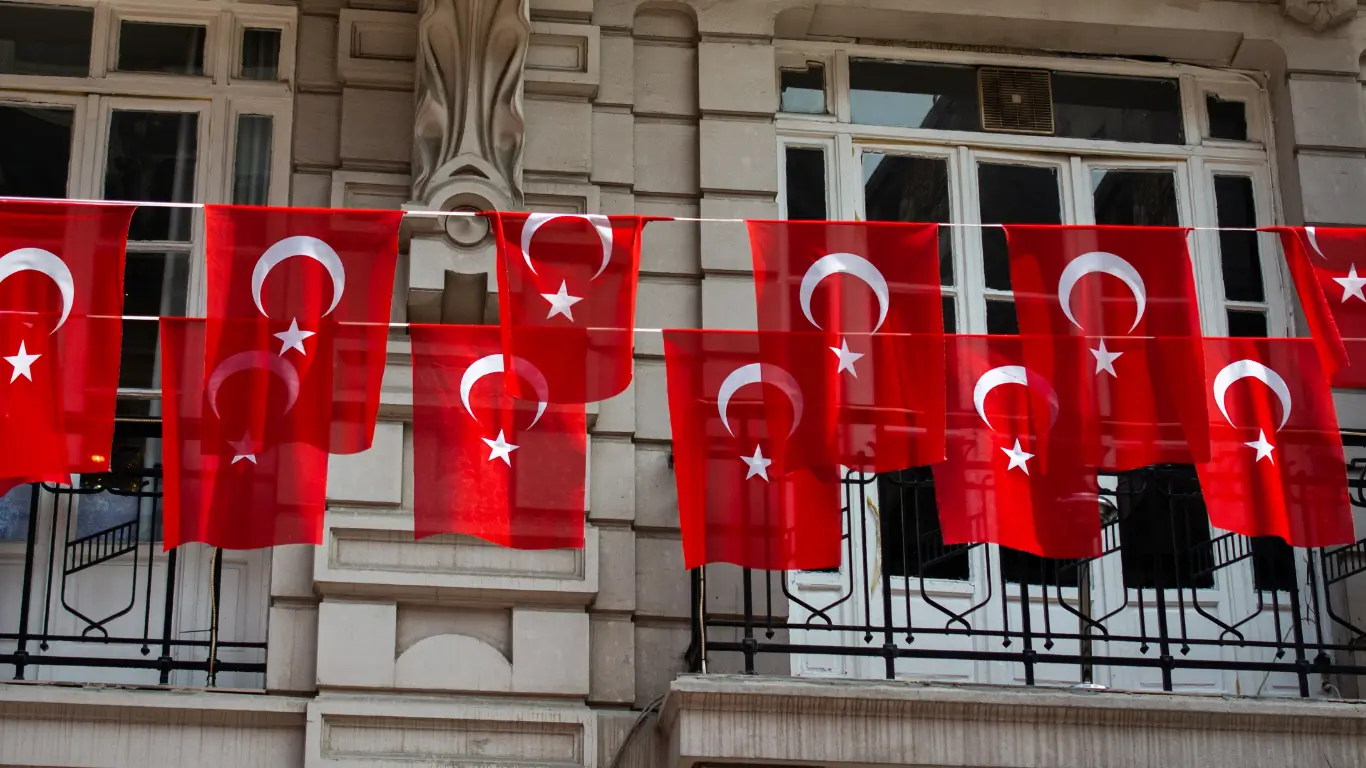
Turkey’s holiday law distinguishes the national holiday on 29 October from other official national holidays and general public holidays. For historical context, the Atatürk Encyclopedia overview of Turkey’s national holidays is a useful official reference.
23 April: National Sovereignty and Children’s Day
23 April commemorates the opening of the Grand National Assembly in Ankara on 23 April 1920. The legal and cultural development of the holiday continued in the years that followed, so I avoid the common oversimplification that today’s Children’s Day format has existed unchanged since 1920. The Atatürk Encyclopedia’s 23 April history explains that evolution in more detail.
As a child, this was the national holiday I looked forward to most. Schools across Seferihisar joined celebrations at the stadium, and local officials sat in the protocol area. Our dance rehearsals could begin about a month in advance. In the final weeks, physical-education lessons were often turned into rehearsal time. As children we were not always pleased about that; PE meant a chance to play football, and losing that hour to another dance rehearsal could feel like a terrible injustice.
19 May: Youth and Sports Day
19 May commemorates Mustafa Kemal Atatürk’s arrival in Samsun on 19 May 1919 and is officially observed as the Commemoration of Atatürk, Youth and Sports Day. The Presidency’s Directorate of Communications provides the official historical background.
My school memories of 19 May are strongly connected with movement: gymnastics displays, sports competitions and poetry readings. Compared with 23 April’s choreographed dances, 19 May felt more athletic.
30 August: Victory Day
30 August marks the victory associated with the final phase of the Great Offensive in 1922 and is observed as Victory Day. The Presidency’s Directorate of Communications summarizes the historical meaning of 30 August.
I have fewer school memories of 30 August than of 23 April, 19 May or 29 October for a simple reason: it fell during the summer school holiday. I remember the day and the flags, but not the same months of classroom preparation.
29 October: Republic Day
29 October marks the proclamation of the Republic in 1923. Under Turkey’s holiday law, the national-holiday period begins at 13:00 on 28 October and continues through 29 October. The Presidency’s Directorate of Communications also provides an official Republic Day overview.
At school, I remember 29 October celebrations as more theatrical than 19 May. Plays, staged scenes and historical reenactments were common in the programs I experienced. Turkish flags were already a familiar sight in shops and homes on normal days, but they became much more visible on national holidays.
Are Turkish Holiday Traditions Changing?
From my own experience, yes, although I would not turn that observation into a national statistic. I grew up in the 1990s and remember almost every stage of the communication shift: landline phones in nearly every home, early button phones, camera phones, smartphones and now instant video calls with someone on the other side of the world.
That change also affected bayram greetings. Face-to-face visiting has not disappeared, but calls, messages and video conversations can now replace visits that once required a trip across town or across the country.
I also notice a generational difference in the rituals themselves. When I was a child, buying special bayram clothes, visiting elders and going to the cemetery felt more serious and expected. I remember cemeteries being genuinely crowded after bayram prayer. Today I still see older people visiting, but I often notice fewer children or grandchildren with them. That is my observation, not proof that every part of Turkey is changing in the same way.
The customs that survive most easily seem to be the ones that still create a direct human connection: saying “İyi bayramlar,” visiting a parent or grandparent, giving a child a little bayram money, sharing food and making room at the table.
If you are interested in other everyday customs that are easier to understand through context than through rules, see my guides to Turkish dining etiquette and Turkish superstitions.
FAQ
What holidays do Turkish people celebrate?
Turkey has religious holidays, national holidays and other public holidays. The two main religious bayrams are Ramazan Bayramı (Eid al-Fitr) and Kurban Bayramı (Eid al-Adha). Major national holidays include 23 April, 19 May, 30 August and 29 October. New Year’s Day, 1 May and 15 July are also public holidays under Turkish law.
What does Bayram mean in Turkey?
Bayram is the Turkish word used for a holiday or festival, but in everyday family conversation it often refers especially to Ramazan Bayramı and Kurban Bayramı. These religious bayrams are strongly associated with family visits, greetings, food, children and remembering relatives who have died.
What is the difference between Ramazan Bayramı and Kurban Bayramı?
Ramazan Bayramı comes at the end of Ramadan and lasts 3.5 days including arife afternoon under Turkey’s public-holiday law. Kurban Bayramı is Eid al-Adha and lasts 4.5 days including arife afternoon. In my family, Ramazan Bayramı was especially associated with sweets and baklava, while meat and kavurma defined Kurban Bayramı.
What is Şeker Bayramı or the Sugar Feast?
Şeker Bayramı, literally “Sugar Feast,” is an informal name you will hear for Ramazan Bayramı. The nickname fits the way many families serve candy, chocolate and desserts to visitors. Ramazan Bayramı is the formal Turkish name.
Do Turkish people kiss elders’ hands during Bayram?
It is a well-known gesture of respect, especially toward older relatives, but it is not something every person or every family practices in exactly the same way. In my family it was expected: we kissed the elder’s hand and brought it to the forehead.
Do people visit cemeteries during Bayram?
Many families do, either on arife or during the bayram itself. My uncle took me after bayram prayer, while some women in our family preferred arife so they could stay home to receive guests the next day. Diyanet also publishes guidance on the etiquette of visiting graves.
Are shops closed during Turkish holidays?
Public institutions and banks generally follow official holiday closures, but private shops, restaurants, markets and tourist businesses can follow different schedules. Religious bayrams also create heavy domestic travel. Check the specific business and current holiday dates rather than assuming everything will be open or closed.
In Short
Turkish holiday traditions are not one fixed national script. Religious bayrams are often centered on family, visits, food and remembrance; national holidays are more public and civic. The details change by family, region and generation, which is why I have kept my own memories separate from official facts throughout this guide.