Kefir is a tangy fermented milk drink made with a living culture of bacteria and yeasts. I have been drinking it for years, and I have also made it at home with reusable grains. That experience changed how I look at the bottled versions I buy in Turkey.
I usually choose the plain version, drink it cold, and pay more attention to the culture and ingredient list than to health claims on the front of the bottle. When I make it myself, I prefer a longer ferment because I like a sharper, more acidic taste.
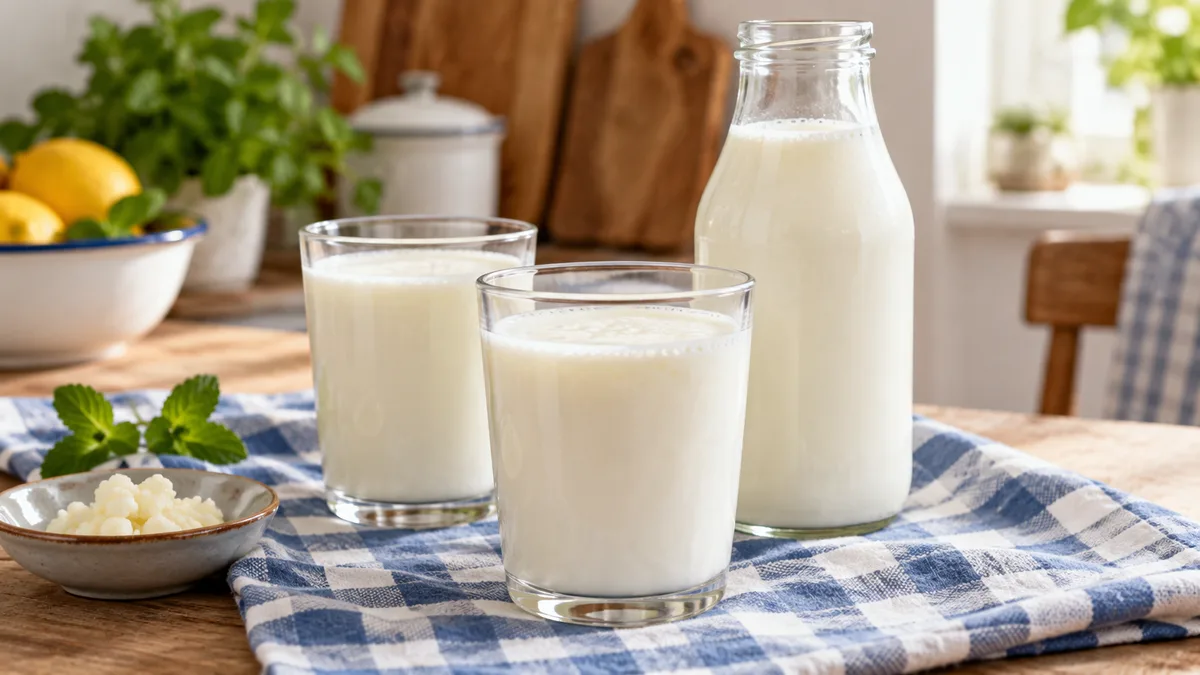
What Is Kefir?
Traditional milk kefir starts with milk and kefir grains. Despite the name, these are not cereal grains. They are soft clusters that carry bacteria and yeasts in a natural matrix.
Those microorganisms ferment the milk. As they work, the drink becomes more acidic and develops its familiar aroma, texture, and slight natural fizz. The exact result changes with the grains, milk, temperature, and fermentation time.
Commercial producers do not all use the same method. Some use traditional grain-derived cultures, while others use standardized starter cultures for more consistent results. That difference matters to me when I read a label.
What Does It Taste Like?
The easiest comparison is drinkable yogurt, but the flavor can be sharper and more complex. Plain versions usually taste tart, slightly creamy, and mildly fermented. Some batches also have a light natural effervescence.
Fermentation time makes a noticeable difference in my kitchen. Around 18–19 hours, my batch stays thinner and tastes milder and a little sweeter. At about 22–24 hours, it becomes thicker, more acidic, and more aromatic. I prefer that longer ferment because I like a tangier drink.
How I Make Milk Kefir at Home
I use fresh pasteurized full-fat cow’s milk. My routine is simple: add active grains to the milk, leave the jar to ferment, strain the finished drink, and return the grains to fresh milk for the next batch.
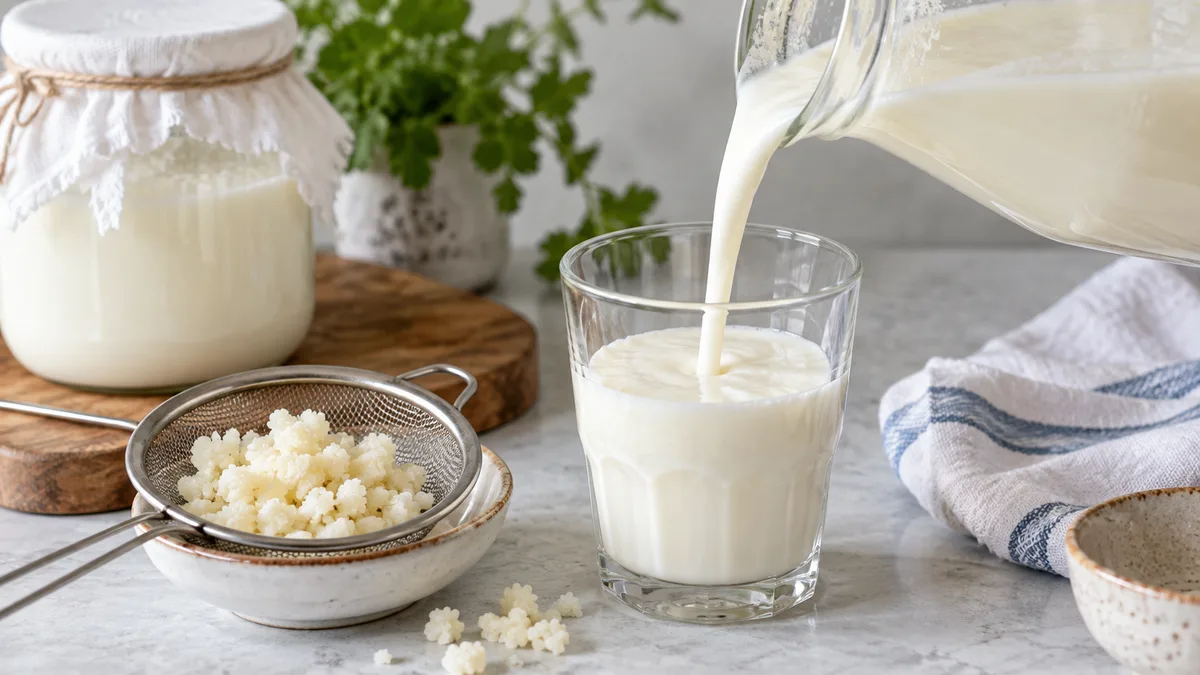
The three photos below are from my own home preparation. They show the grains, the straining step, and the finished drink.


- I put the grains into a clean jar and add pasteurized full-fat milk.
- I leave the mixture to ferment at room temperature. For my taste, 22–24 hours usually works best.
- I strain the finished drink and separate it from the grains.
- I place the grains into fresh milk and use them again for another batch.
This 18–24 hour range also matches Colorado State University Extension’s home-fermentation guidance. Their instructions also stress clean equipment, pasteurized milk, and refrigeration after straining.
How Fermentation Time Changes the Result
| My usual fermentation time | What I notice |
|---|---|
| 18–19 hours | Thinner texture, milder acidity, and a slightly sweeter taste |
| 22–24 hours | Thicker texture, sharper aroma, and a more sour taste |
These are my own kitchen observations, not fixed rules for every batch. Room temperature, grain activity, milk, and the grain-to-milk ratio can all change the timing. I judge the result by smell, texture, and taste rather than by the clock alone.
Kefir Grains vs Starter Culture
Traditional grains contain a mixed community of bacteria and yeasts. You strain them out after fermentation and can reuse them again. A commercial starter, by contrast, usually contains selected microorganisms in standardized proportions.
Neither label tells you everything about the finished product, but I like knowing how the producer fermented it. Turkey’s food-production teaching materials also distinguish traditional grain-based production from the standardized cultures commonly used at industrial scale.
Homemade vs Store-Bought: What I Notice
My homemade version smells stronger and tastes more sour than most supermarket bottles I buy. Part of that comes from my preference for a 22–24 hour ferment. A shorter batch is noticeably milder.
I also find homemade batches less forgiving in storage. In my kitchen, the flavor and texture are usually at their best during the first three or four refrigerated days. If I keep a batch longer, I notice more gas and eventually a harsher, unpleasant taste.
I treat that three-to-four-day window as a personal freshness observation, not a universal safety limit. Home fermentation varies, so I keep the finished drink refrigerated and use clean equipment rather than relying on smell alone as a safety test.
Kefir vs Yogurt: What’s the Difference?
| Fermented milk drink | Yogurt | |
|---|---|---|
| Texture | Usually pourable | Usually thicker and spoonable |
| Traditional culture | Mixed bacteria and yeasts in reusable grains | Primarily selected bacterial cultures |
| Taste | Often sharper and more tangy | Usually milder, though it varies |
| How I use it | I drink it cold and plain | I use yogurt as both a food and an ingredient |
Both belong to the wider world of fermented dairy, but they play different roles in my kitchen. Turkish yogurt has a much deeper place in everyday Turkish cooking. The drink in this article is more often something I buy or prepare to drink on its own.
How I Choose Kefir in Turkish Supermarkets
I almost always buy plain rather than fruit-flavored bottles. I prefer the natural tart taste, and the shorter ingredient list makes products easier to compare.
The culture information matters most to me. I like a label that clearly says whether the producer uses grain-derived culture or a standardized starter. I also appreciate it when the manufacturer names the microorganisms instead of hiding everything behind a vague culture description.
For example, the Kefirzadem products I have checked use a culture produced from kefir grains. Current retail label data also describes them that way. On Pınar products I have bought or examined, the culture information has been presented with named strains or codes. Formulas can change, so I still read the current bottle rather than relying only on the brand name.
I also check added sugar and flavorings, especially in fruit varieties. For me, the back label tells me more than claims on the front.
What Does the Research Actually Say?
Researchers have studied this fermented drink for lactose digestion, gut microbiota, and several metabolic outcomes. The evidence is not equally strong for every claim.
A small controlled study in adults with lactose maldigestion found better lactose digestion and tolerance than with regular milk. That does not mean every person with lactose intolerance will react the same way. Products also vary in their remaining lactose.
Evidence for changes in the human gut microbiota remains more limited. A 2026 systematic review found modest and inconsistent changes across intervention studies. The authors called for better evidence on meaningful functional effects.
Trials have also looked at blood glucose, cholesterol, blood pressure, inflammation, and other metabolic markers. Some report promising changes. However, a systematic review of randomized trials found important limitations, including small samples and differences between products.
For that reason, I do not think it makes sense to describe the drink as a treatment, cure, or “health elixir.” I see it first as a fermented food that I enjoy. Research may clarify more specific benefits over time.
Is Kefir Turkish?
The drink has deep historical ties to the North Caucasus. A recent review of indigenous grains discusses the Mount Elbrus region as part of that history, while noting that the exact evolutionary origin of the grains remains uncertain.
So I would not present it as belonging exclusively to one modern country. It spread beyond the Caucasus and is now familiar in Turkey and many other places.
Within Turkish food culture, I see it as a familiar modern fermented dairy drink rather than a replacement for older everyday traditions. Ayran and yogurt still have a much more established role at the Turkish table.
How I Usually Drink It
I keep it simple: straight from the refrigerator, cold and plain. Most often, I drink a glass in the morning or before going to bed.
That timing is just my routine, not a health rule. I do not choose it because I believe there is a special “best” hour. What matters more to me is the flavor, the culture information, and whether the product still tastes fresh.
After years of drinking both homemade and commercial versions, I still prefer a plain, tart bottle with a clear ingredient list. When I make a batch myself, I let it go a little longer because that sharper homemade taste is exactly what I want.